Sauna Wood Types: Cedar, Spruce, Aspen, Hemlock UK 2026
Western red cedar vs spruce vs aspen vs hemlock for sauna interiors: heat properties, durability, scent, price, and which suits which use case.
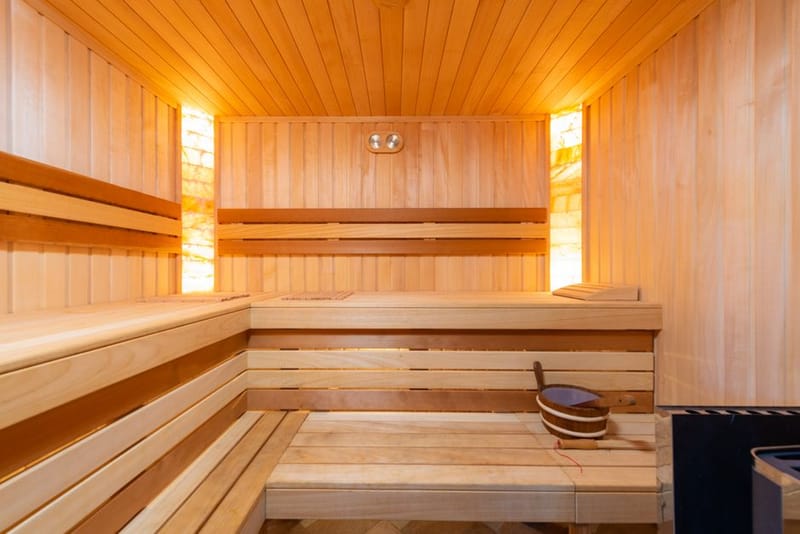
If you're shopping for a home sauna or replacing the interior cladding on an existing one, the wood choice matters more than most marketing suggests. Different woods handle the sauna environment differently - some last decades, some warp; some hold a beautiful scent, some are odourless; some are gentle on bare skin, some are not. This guide walks through the four common UK sauna woods and where each one belongs.
What makes a wood 'good for sauna' at all
Four properties that separate sauna wood from regular timber.
Sauna interiors face a brutal cycle: hot + humid during sessions (80-90°C and high humidity for traditional Finnish; 50-60°C with lower humidity for infrared), cold + dry between sessions. The wood needs:
- Low thermal conductivity - so it doesn't burn skin on contact even at session temperature. Most softwoods qualify; metal benches don't.
- Low resin content - resinous woods like pine bleed sticky sap at sauna temperatures, ruining benches and clothing. This is why pine is rare in dedicated saunas despite being cheap.
- Dimensional stability - the wet/dry cycle causes wood to expand and contract. Stable woods don't warp, split, or pop nails over time.
- Rot resistance - the humid environment is friendly to fungi. Naturally rot-resistant woods (cedar) last decades; less resistant woods (hemlock) need replacement sooner.
Different woods optimise different combinations. None is universally 'best'.
Origin: mostly Pacific Northwest (Canada/USA). High-grade FSC-certified Canadian cedar is the standard for premium UK saunas.
Properties: naturally rot-resistant via plicatic acid, low resin content, low thermal conductivity, distinctive reddish-brown colour that deepens to warm grey-brown over years. Holds the famous 'cedar' scent for 5-10+ years of regular use.
Best for: the full interior of a premium home sauna - walls, ceiling, benches. The scent is a defining feature of the cedar sauna experience; people who love it find it transports. People who don't (a minority) will find it overpowering.
Downsides: price (~2-3x spruce/hemlock per board), can stain bench surfaces in places where skin oils accumulate, the scent dissipates over time, sustainable supply concerns mean FSC certification matters.
Nordic spruce: the Finnish default
Mid-price, traditional white-and-knot look, very stable.
Origin: Northern Europe (Finland, Sweden, Norway, Estonia). What most actual Finnish saunas are built from.
Properties: very stable in wet/dry cycling, light cream-white colour with characteristic small dark knots, mild pleasant scent that's less pronounced than cedar. Adequately rot-resistant in indoor sauna environments. Excellent dimensional stability so panels stay flat and joints don't open up.
Best for: the Finnish-tradition home sauna look + a balanced budget. Wall + ceiling cladding in spruce, with aspen benches, is the most common Finnish home-sauna spec.
Downsides: the knot pattern isn't to everyone's taste, scent is mild compared to cedar, can develop slight discolouration around knots after years of heat cycling.
Aspen: the bench wood
White, knot-free, no scent - what you want where skin touches.
Origin: Northern Europe + Russia (European aspen) or North America (Western aspen). Sometimes labelled as 'abachi-like' though true abachi is a separate African hardwood used in higher-end Finnish saunas.
Properties: pale white colour, no visible knots, very low resin content, low thermal conductivity (genuinely cool to the touch even after a long session), almost no scent. Soft to lean against, doesn't stain easily.
Best for: bench faces, backrests, headrests - any surface where bare skin will be in direct contact for extended periods. Many premium saunas combine cedar or spruce walls with aspen benches specifically for the skin-comfort difference.
Downsides: not as durable as cedar over 10-15 year horizons (softer wood), pricier than spruce, can show wear faster on heavily-used bench faces.
Hemlock: the budget option
Cheapest of the four, plain look, low scent.
Origin: usually North American hemlock (Canadian + US Pacific Northwest). Common in entry-level UK home saunas + many infrared cabins.
Properties: light brown/tan colour with a fine straight grain, very low resin content, low scent, adequate stability. Less naturally rot-resistant than cedar but performs fine in dry-air infrared saunas where humidity is lower than traditional Finnish.
Best for: budget home saunas (especially infrared cabins where the lower humidity is kinder to less durable woods), spare-room conversions where you want a clean modern look without the cedar price tag.
Downsides: shorter lifespan than cedar in high-humidity environments, less character (no strong scent, plain appearance), some users find the look generic.
Side-by-side comparison
Pick by the property that matters most for your use case.
| Western red cedar | Nordic spruce | Aspen | Hemlock | |
|---|---|---|---|---|
| Origin | North America (Pacific Northwest) | Northern Europe | Northern Europe / Russia / N America | North America |
| Price (relative) | Premium - GBP 2-3x spruce/hemlock | Mid-tier - the Finnish default | Mid-to-upper (esp. abachi grade) | Budget - GBP 0.5x spruce |
| Scent | Strong, distinctive, long-lasting | Mild, pleasant, modest fade over time | Virtually none | Very low |
| Colour | Reddish-brown, warms to grey-brown | Cream-white with small dark knots | Pure white, knot-free | Light tan, fine straight grain |
| Lifespan | 20+ years in traditional sauna | 15-20 years | 10-15 years on heavy-use benches | 10-15 years (longer in dry infrared) |
| Best for | Full interior of premium sauna | Walls + ceiling on a balanced budget | Bench faces, backrests, headrests | Budget cabins + infrared saunas |
Mixed-wood interior: the practical sweet spot
Most premium home saunas combine 2-3 woods for the right job in the right place.
The most common premium UK home-sauna spec uses:
- Cedar or spruce for walls + ceiling (scent + look + durability).
- Aspen for bench faces, backrests, headrests (skin comfort + zero scent in the area where skin spends most time).
- Heat-treated wood (ThermoWood spruce or similar) for the floor + lower walls behind the heater (extra rot resistance in the wettest part of the cabin).
This combination handles each environmental demand with the right material rather than compromising one for the other. Budget saunas typically use a single wood throughout (often hemlock); mid-range uses spruce throughout; premium goes mixed.